Press Release

Workplace Health Safety for Business Continuity With Inland Container Depot (ICD) During COVID-19

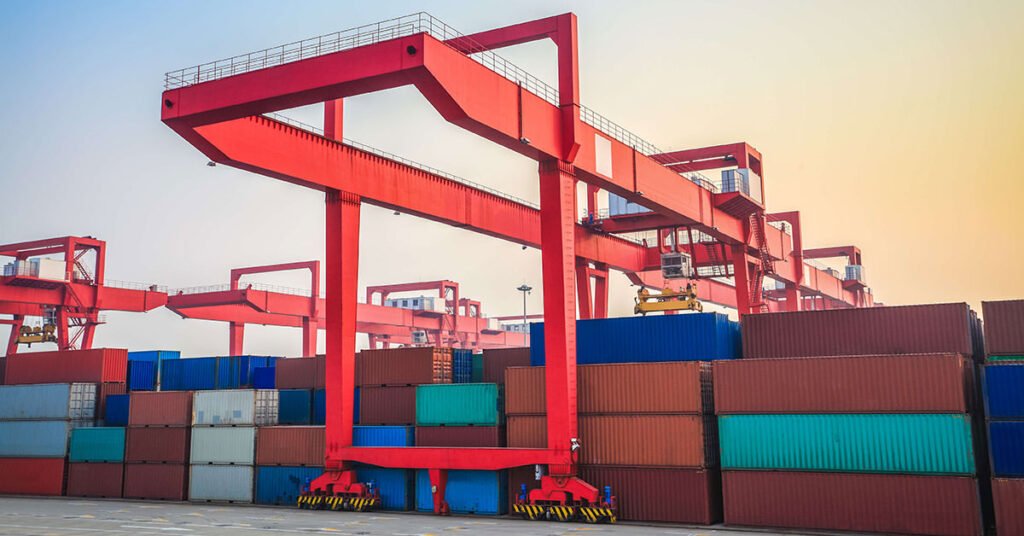
To disseminate and reemphasise the core health safety guidelines to prevent further spread of the disease and maintain trade and business activities of the economy following the impact of the COVID-19 pandemic, Business Initiative Leading Development (BUILD) and International Finance Corporation organised a virtual workshop on Workplace Health Safety for Business Continuity with Inland Container Depot (ICD) during COVID-19 on 7 March 2021.

This initiative is supported by Bangladesh Investment Climate Fund II, which is implemented by the International Finance Corporation (IFC), World Bank Group and funded by the Foreign, Commonwealth & Development Office (FCDO). The workshop’s objectives were to sensitise concerned service providers and service takers to maintain health safety measures to run businesses even in the post-COVID stage to mitigate export losses.

In the beginning, Ferdaus Ara Begum, CEO, BUILD, welcomed the participants and informed them that Inland Container Depot (ICD) contributed a lot to attaining revenue collection, which is continuously increasing, and the documentation processing time has also been reduced further. She reiterated that Bangladesh had been qualified as a developing country by the UN, which has enhanced the country’s image while posing new challenges. In the coming days, we will have to run our businesses, maintaining our health safety issues.

Saiyab Amal Ahmed, Consultant, International Finance Corporation (IFC), presented the keynote and explained how IFC works closely with NBR in regard to preparing policies, health safety guidelines and implementation of favourable trade policies. In this respect, he referred to the salient points of the WBG global guidance notes and acknowledged the role of NBR, ICD greatly.

Mr Nazmul Hoque, Additional Commissioner, Dhaka Custom Inland Container Depot (ICD), appreciated and thanked IFC for supporting them in preparing health safety guidelines to tackle the COVID situation. Because of continuing business while maintaining health safety guidelines during COVID19, revenue collection was almost uninterrupted. They have kept ICD operation open 24/7 days to support business and the private sector.

Enclosed is the press release (in English) for your kind consideration. Please feel free to contact us for any queries.


Workplace Health Safety for Business Continuity With Inland Container Depot (ICD) During COVID-19 Read More »

BUILD Chairperson Abul Kasem Khan Called on Executive Chairman of Bangladesh Economic Zone Authority (BEZA)

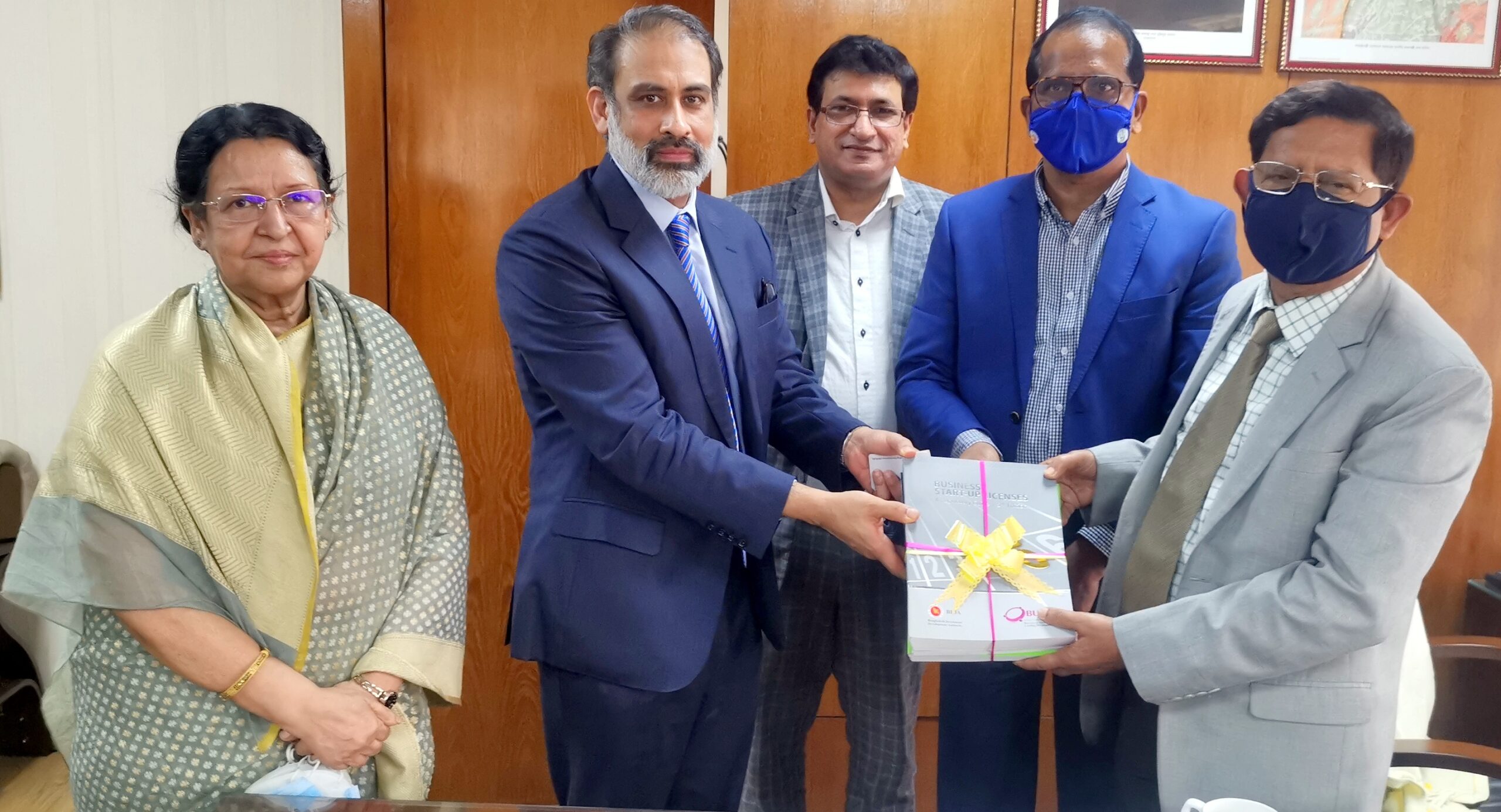
Business Initiative Leading Development (BUILD) Chairperson Abul Kasem Khan called on Paban Chowdhury, Executive Chairman of Bangladesh Economic Zone Authority (BEZA), on 2 March 2021 at his office to discuss more private sector-friendly policies and joint research for further success in BEZA.

BEZA Executive Chairman informed that BEZA has already received more than USD 20 billion of investment and it is going reach USD 30 billion soon. Terming Mirersarai EZ as a game-changer, he shared that land allocation is almost exhausted in this Zone. Considering the potential, the Zone areas can be increased further, encompassing Companigong, Sitakunda, Sandip, Hatia and so on.

He put emphasis on the macro-level policy reforms and strong governance for the successful completion of the targeted EZs in Bangladesh.

He further suggested that BUILD should come up with comprehensive proposals with facilitation of trade and investment, attracting more FDI, supporting SMEs, spillover over impact in society in the SEZs etc.

Mentioning the success of SEZs in different countries, Abul Kasem Khan added that each SEZ could become a new economic growth centre for the country. He added that BUILD is thinking of preparing a concept called SEZ – the New Economic Frontier.

He said that SEZs ultimately work towards not only creating jobs within the SEZ but outside as well in addition to generating various spillover economic opportunities, thereby effectively working as economic cities. Therefore, SEZs should share in the additional revenue generated from various taxes collected from economic activities created in that area due to the SEZs operations. This sort of support in terms of a revenue-sharing model and approach can be developed that will thus bring sustainability to SEZs to a great extent. Each SEZ is an economic frontier for the government to nourish and an economical city to be developed.

BUILD CEO Ferdaus Ara Begum said that the policy gaps in handling private and public EZs and other country-specific EZs would need to be minimized. She added that BUILD would come up with a research study on the New Economic Frontier to consolidate the idea and seek support from the government for policy reforms in attracting more private sector investment.

Enclosed are the press releases (in English and Bangla) for your kind consideration. Please feel free to contact us for any queries.

BUILD Chairperson Abul Kasem Khan Called on Executive Chairman of Bangladesh Economic Zone Authority (BEZA) Read More »

Long-Term Health Safety Measures for Export Competitiveness

To ensure business continuity following the impact of the COVID-19 pandemic, BUILD and IFC organized a virtual workshop on Health Safety Guidelines for Business Continuity and Trade Facilitation during COVID-19 for Dhaka Custom House on 28 February 2021. This initiative is supported by Bangladesh Investment Climate Fund II, which is implemented by the International Finance Corporation (IFC), World Bank Group and funded by the Foreign, Commonwealth & Development Office (FCDO). The workshop’s objectives were to sensitize concerned service providers and service takers to maintain health safety measures to run businesses even in the post-COVID stage to mitigate export losses.

Muhammed Mahbubur Rahman, Additional Commissioner, Custom House, Dhaka, highlighted steps taken by the Dhaka Customs to smooth and effectively implement their daily tasks while maintaining health safety protocol.

The Custom House clears 3,000-4,000 bill of ladings (B/L) every day while minimizing risks and ensuring quality so that COVID exemptions are not abused. He stated that in order to maintain export and import growth as well as manage the supply chain, they worked hard so that revenue collection does not fall. Because of their sincerity, import growth has remained steady.

In the beginning, Ferdaus Ara Begum, CEO, BUILD welcomed the participants and mentioned that the likely losses of export earnings annually for the country could be about USD 7 billion after the LDC graduation by 2026. We need to be prepared for that and start working in a coordinated manner to stave off the potential negative impact.

She also referred that the revenue collection in different heads such as supplementary duty, export and VAT at the domestic stage has been reduced in the month of December 2020 compared to those in the corresponding month of 2019. The worst sufferers are the small entrepreneurs, while there was a decline in turnover tax of 31% in the corresponding period as mentioned above. She added that we need to apply the double speed strategy to overcome the challenges at the COVID recovery stage.

Nusrat Nahid, Private Sector Specialist, International Finance Corporation, made a presentation highlighting health safety issues and informed about the impacts of the COVID-19 in trade. She stressed the need to maintain different health and safety guidelines even after the roll-out of the vaccines.

Enclosed is the press release (in English) for your kind consideration. Please feel free to contact us for any queries.
Long-Term Health Safety Measures for Export Competitiveness Read More »

BUILD Chairperson Abul Kasem Khan’s Called on the Honourable Minister for Textiles and Jute

Business Initiative Leading Development (BUILD) Chairperson Abul Kasem Khan called on Golam Dastagir Gazi (Bir Protik), MP, Honourable Minister for Textiles and Jute, on 24 February 2021 at his office at the secretariat to discuss better utilization of the potential of jute through industrial diversification.

Textiles and Jute Minister Golam Dastagir Gazi (Bir Protik), MP, appreciated the proposal put forward by the BUILD Chairperson for producing jute-based pulp from local green jute to promote the jute industry. At the same time, he endorsed the need for further research in this respect.

Following the example of neighbouring countries, the Government of Bangladesh will look into framing relevant policies to support the industry, but it will need feedback and support from various stakeholders, including jute traders, large farmers and local entrepreneurs and investors, said the Minister. He added that innovative ideas need to receive policy support from the government for bringing in positive and transformative change in the sector.

To encourage the jute sector, we may consider duty exemption for the entrepreneurs who use the local pulp in their production. The export development fund (EDF) facility should be made accessible to the country’s jute exporters, added the Minister. In regard to jute-based pulp and paper, he suggested that a well-designed pilot can be initiated based on an effective proposal.

BUILD Chairperson Abul Kasem Khan suggested to the Minister that production of jute-based pulp from local green jute would not only be an attractive business proposition for the sector, but it would also enable us to make strides towards becoming a green economy and addressing climate change and environmental sustainability. In that respect, he recommended a Jute Pulp and Paper Act similar to the existing Jute Packaging Act, which has worked well for popularizing jute-based packaging in the country.

Enclosed are the press releases (in English and Bangla) for your kind consideration. Please feel free to contact us for any queries.

BUILD Chairperson Abul Kasem Khan’s Called on the Honourable Minister for Textiles and Jute Read More »

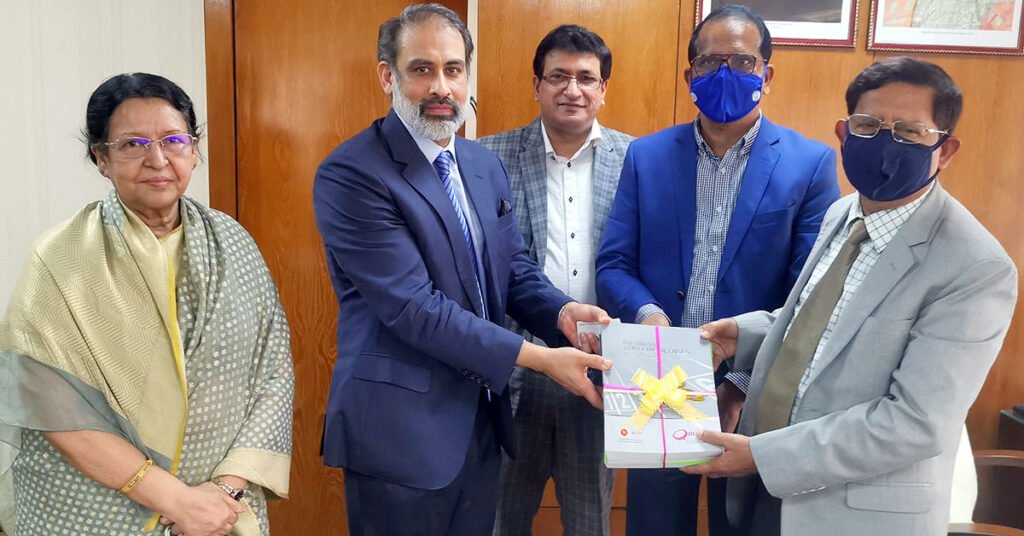
BUILD Trustee Board Meets With the Honourable Commerce Minister

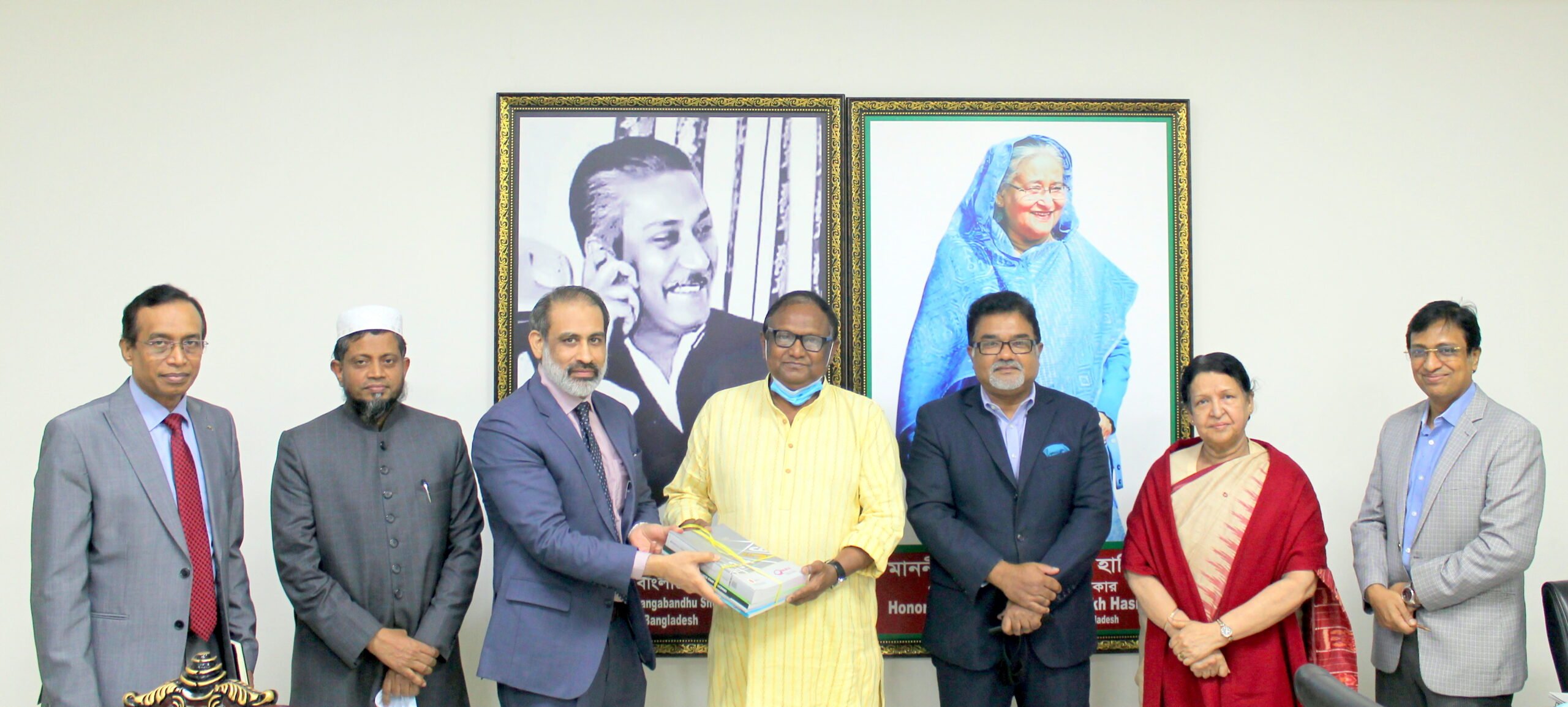
Business Initiative Leading Development (BUILD) Chairperson Abul Kasem Khan paid a courtesy call on Tipu Munshi, Minister of Commerce, Ministry of Commerce, Government of Bangladesh, on 15 February 2021 at the Minister’s office.

Commerce Minister Tipu Munshi said his ministry would work to reduce the current minimum paid-up capital to 0.5 million from 2.5 million for the one-person company in the Companies Act (2nd Amendment) Bill, 2020 to allow more small businesses to take part in registration, thus enabling their formalization. The honourable minister also emphasized the need for trade license for e-commerce businesses.

Mentioning that e-commerce should be automatically recognized as enterprises, the minister added that this high-potential sector is not getting promoted as expected since they need trade licenses. His ministry is already working with the Local Government Ministry to speed up introducing trade license for the industry so that e-commerce businesses could access finance and other opportunities.

Enclosed is the press release (in English) for your kind consideration. Please feel free to contact us for any queries.
BUILD Trustee Board Meets With the Honourable Commerce Minister Read More »

7th Meeting of the SME Development Working Committee of BUILD

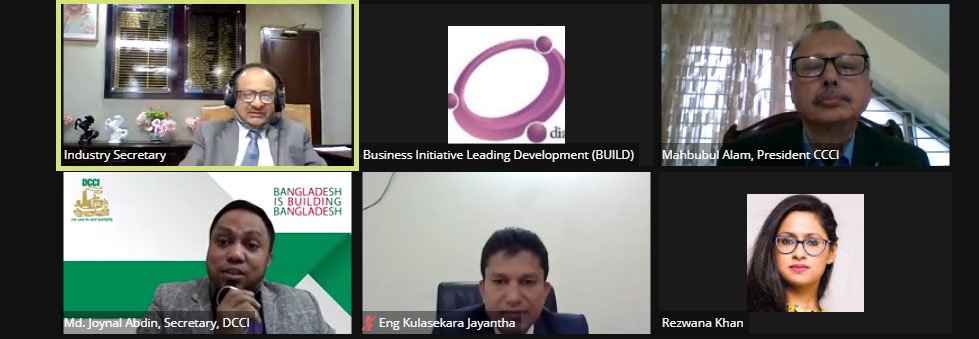
The 7th meeting of the SME Development Working Committee of BUILD was held on 7th February 2021, co-chaired by K. M. Ali Azam, Secretary, Ministry of Industries and Mahbubul Alam, President Chittagong Chamber of Commerce and Industry (CCCI). Ferdaus Ara Begum, CEO, BUILD, presented two keynotes presentations on Industrial Policy 2016 and Support for CMSMEs in Bangladesh & Revisiting the Action Plan of SME Policy 2019 to Address COVID-19 Situation.

CEO BUILD informed at the very beginning of her speech that among the 26 recommendations placed in the 6th SMEDWC, ten have been implemented, and two are in process. She stressed the importance of the inclusion of Logistics as a High Priority Sector in the National Industrial Policy 2021. Bangladesh is going to graduate from LDC by 2024. This will be a considerable achievement for Bangladesh. On the other hand, we will lose some preferential treatment in the export market. To attain sustainable cost competitiveness, there is no alternative to improve the logistics scenario in Bangladesh. Replacement Cost and Value of Fixed assets excluding and buildings may need further clarification. She emphasised the design of an action plan for the fruitful implementation of National Industrial Policy2021’ by addressing the impact of COVID-19 in the socio-economic context. She urged the inclusion of the definition of CMSME and Women Entrepreneurs in the industrial Policy 2021. National Policy for SME cluster base development as well as to ensure ease of finance for the clusters needs to be ensured.

K. M. Ali Azam, Secretary, Ministry of Industries, thanked BUILD for the presentations and organising such a wonderful meeting. To reach the goals set by the government by 2041, it is essential to implement demand-based individual Cottage, Micro, Small, Medium & Large industries. The Ministry of Industries will consider all the recommendations placed by BUILD in the National Policy 2021.

Mahbubul Alam, President, Chittagong Chamber of Commerce and Industry (CCCI), in his welcome speech, said that there is no alternative to harmonised and synchronised policy advocacy for sustainable SME growth in Bangladesh. 99% of the industries in Bangladesh belong to the SME sector. This sector contributes 86% of total employment generation in Bangladesh. The way forward to resolve the constraints faced by SMEs needs to be addressed in the upcoming Industrial Policy and SME Policy properly. President CCCI drew the attention of the government to ensure ease of financing for the WEs.

Enclosed are the press releases (in English and Bangla) for your kind consideration. Please feel free to contact us for any queries.
7th Meeting of the SME Development Working Committee of BUILD Read More »

Gender-Responsive Public Procurement Urged at BUILD-ITC Policy Dialogue

To increase women’s participation in government procurement in Bangladesh, the Central Procurement Technical Unit (CPTU) of Bangladesh, Business Initiative Leading Development (BUILD), and the International Trade Centre (ITC)’s SheTrades Initiative organized a virtual policy dialogue on “Gender-Responsive Public Procurement in Bangladesh: A New Methodology” on February 3, 2021. The dialogue took stock of the outcomes of previous dialogues and presented a newly developed methodology by ITC to create a gender-responsive roadmap for public procurement in Bangladesh.

Having welcomed the participants, Director (Joint Secretary) of CPTU Md. Aziz Taher Khan said that the presence of women tenderers in the meeting is a clear testimony in favour of developing a gender-responsive public procurement in Bangladesh.

The Government has made the Public Procurement Act, a new set of Public Procurement Rules and Citizen Portal EGP System to improve performance of public procurement with more transparency and ensuring fair treatment to all. We have seen that the presence of women in public procurement is not adequate. Yet, the discussion gives some indications about the way forwards for developing a gender-responsive public procurement in Bangladesh in the coming days for enabling women-owned businesses (WOB) to access markets and working closely with both private and public sectors to develop tools and knowledge to prioritize gender equality in business opportunities, said the CPTU Director.

Ferdaus Ara Begum, CEO, BUILD informed that governments spend USD 9 trillion on public procurement every year. This can account for approximately 10-15% of GDP in developed countries and up to 40% GDP in developing countries. Women account for only 1% of public procurement opportunities worldwide. The participation of women entrepreneurs in the public procurement system is very insignificant in Bangladesh because of the knowledge and skills gap. To facilitate the Bangladeshi women entrepreneurs in the public procurement system in Bangladesh, she emphasized initiating an effective Gender Responsive Public Procurement Road Map to accommodate the WEs in the existing system.

Enclosed are the press releases (in English and Bangla) for your kind consideration. Please feel free to contact us for any queries.
Gender-Responsive Public Procurement Urged at BUILD-ITC Policy Dialogue Read More »

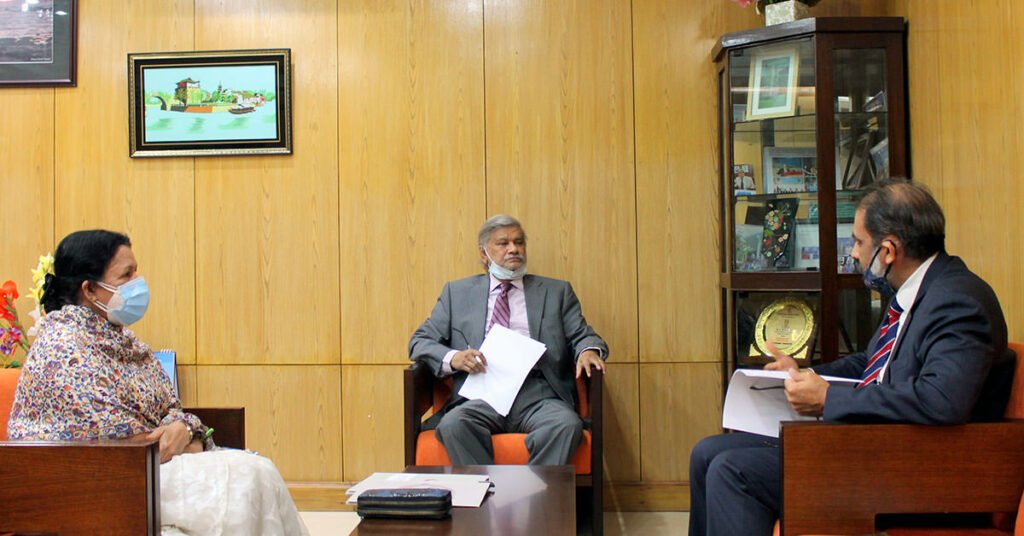
Meeting With the Honourable Planning Minister

BUILD Chairperson Abul Kasem Khan paid a courtesy call on MA Mannan MP, Minister of Ministry of Planning, Government of Bangladesh, on 26 January 2021 at the Minister’s office.

Planning Minister MA Mannan said that we need to step ahead to ensure more private sector engagement in a public-private partnership for coordinated development in the country.

Stressing on the importance of enabling the business environment in Bangladesh, he stated that the government would extend all forms of logistical support to make the private sector vibrant. In this line, he appreciated the formation of the Logistics and Infrastructure Working Committee of BUILD. It is commendable that BUILD already has a well-functioning public-private dialogue (PPD) model. He expressed hope that BUILD, with its Working Committees, will continue to contribute to the government’s policy-making process independently.

BUILD Chairperson Abul Kasem Khan briefly highlighted the organisation’s major activities and appreciated that the government had taken a number of fiscal, monetary, and micro-financial measures to combat COVID-19. The pandemic has posed unprecedented challenges to the entire global economy, which continues to exert downward economic pressures on countries across the world. With timely action, the government not only delivered economic relief to many but also injected confidence into businesses and the economy, he said.

Further initiatives to address employment and revive domestic demand would be critical to set the economy back on a robust growth pathway. Otherwise, the target of the Perspective Plan for manufacturing growth may be challenging to achieve, he added.

Enclosed are the press releases (in English and Bangla) for your kind consideration. Please feel free to contact us for any queries.

Meeting With the Honourable Planning Minister Read More »

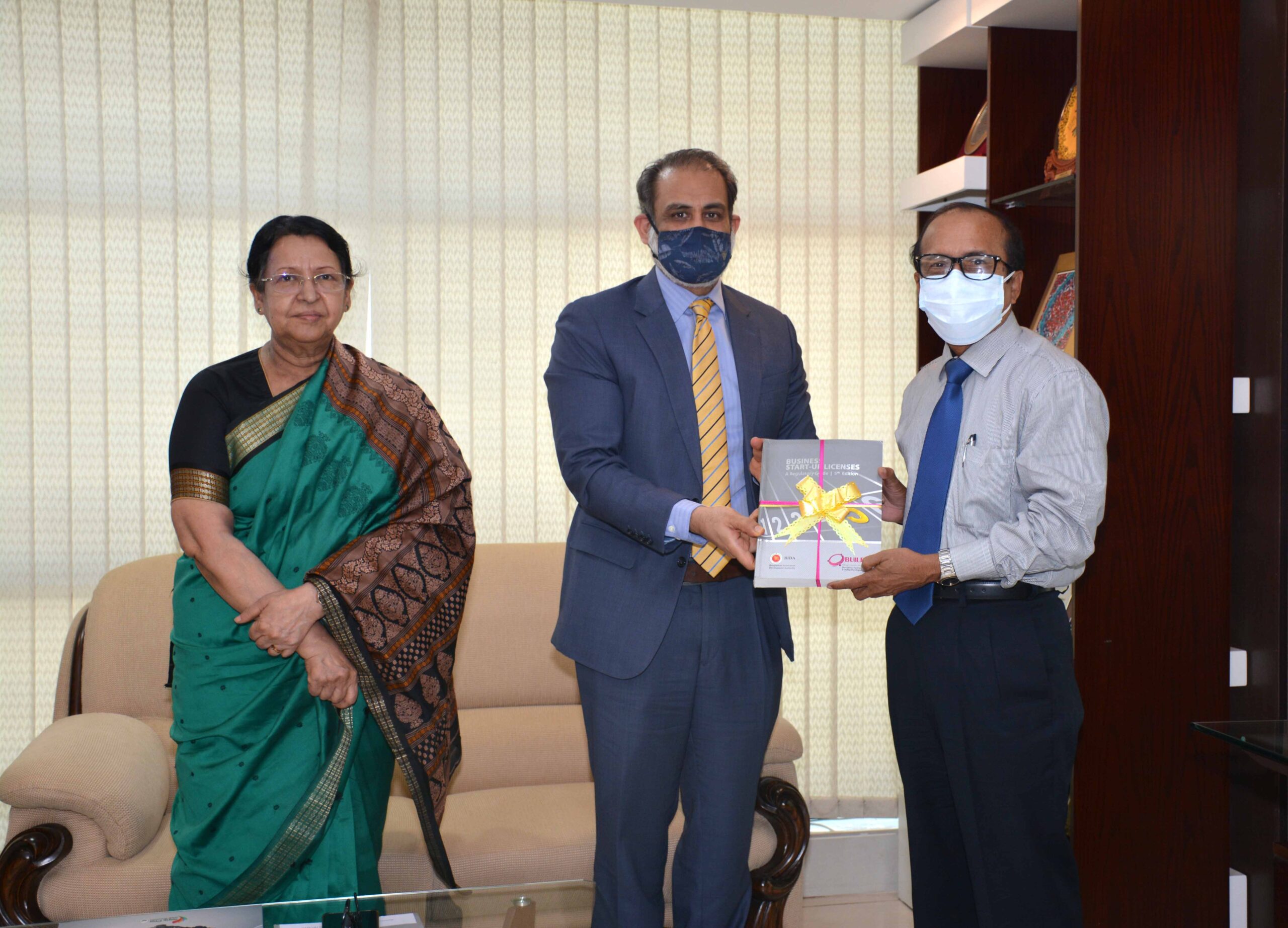
A Clear Regulation From the Government Is Necessary for Disposing of Used Cooking Oils to Ensure Health Safety

The Government of Bangladesh is working to promulgate policy on trans-fat and use of edible oil in restaurants as well as raise stakeholder awareness on the issue, said Abdul Kayowm Sarker, Chairman of Bangladesh Food Safety Authority (BFSA). The policy will address the issues of proper use of edible oil and trans-fat content in food.
According to Food Safety Hygiene Regulation 2018, in section 7(a), nobody can use any by-products of food preparation. Used cooking oil is a kind of waste product in restaurants and food industries; hence it must not be applied for further use as it violates the Food Safety (Hygiene) Regulation, 2018. In particular, we are interested in implementing the testing methods into our regular checks at restaurants and other food business operators to monitor the exact amount of used cooking oil and other criteria, said he.

Business Initiative Leading Development (BUILD) and Muenzer Bangla Private Limited- a subsidiary of Muenzer Bioindustrie of Europe, organised the virtual dialogue on the Policy of Developing Collection System for Used Cooking Oil in Bangladesh on 11 January 2021. Abdul Kayowm Sarker, Chairman, BFSA, joined the meeting as chief guest.

Enclosed are the press releases (in English and Bangla) for your kind consideration. Please feel free to contact us for any queries.
A Clear Regulation From the Government Is Necessary for Disposing of Used Cooking Oils to Ensure Health Safety Read More »

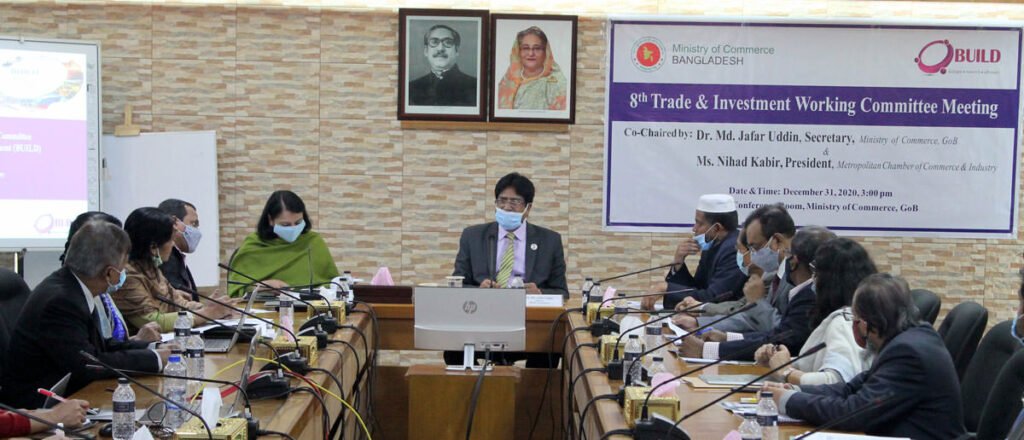
Equal Treatment of the Non-RMG Export Industries Urged At T&I Working Committee Meeting of BUILD

After graduation of Bangladesh, a number of DFQF (Duty-Free Quota-Free) facilities will be eroded; the country will need to proceed for bilateral FTA with potential partner countries for which we need to have more profound studies, research and understanding for offsetting revenue loss in order to make the country competitive in export, said Dr Md. Jafar Uddin Secretary, Ministry of Commerce.

While co-chairing the 8th meeting of Trade & Investment (T&I) Working Committee of Business Initiative Leading Development (BUILD) on 31 December 2020 at the Ministry of Commerce, Dr Md. Jafar Uddin said that export diversification is one of the priorities of our government, for which our government is working actively.

Having welcomed the representatives from different public and private sector entities, the Secretary of the Ministry of Commerce assured implementation of BUILD’s proposed reform for export diversification and supportive policies for Non-RMG sectors.

He also requested BUILD to send all proposals coming out of the Trade and Investment Working Committee meeting, and they will be actively considered, but we need the recommendations with an action matrix so that we can coordinate with different ministries accordingly to see a better implementation of our reforms.

Barrister Nihad Kabir, President, Metropolitan Chamber of Commerce and Industry (MCCI), who is the Co-chair of the Trade and Investment Working Committee from the private sector, said that the government should come forward to provide equal fiscal, monetary assistance to all the potential export-oriented sectors as like the RMG.

Enclosed are the press releases (in English and Bangla) for your kind consideration. Please feel free to contact us for any queries.
Equal Treatment of the Non-RMG Export Industries Urged At T&I Working Committee Meeting of BUILD Read More »